You know your organisation. We test new technology on public recordings at Radio Wnet and Czarne Niebo, then help build your own AI system, including a fully local one.
Szpieg+ on ZBook links recordings, words and metadata. Try the standalone demo.
One reference photo. One prompt. Two images.AI visualisations with a vector mark on the sticker, not photographs of a working setup. Raw images and method below.See both originals ↓
L00P.AI / TWO DIRECTIONS AND THEIR COMBINATION
Where shall we begin?
Choose the closest starting point. You do not need to fit your idea into our template: you can leave your contact details and tell us about it in conversation.
Your choice selects a conversation topic in the form. The message is optional.
SZPIEG+ / TRY IT IN YOUR BROWSER
Click a word. Hear the source.
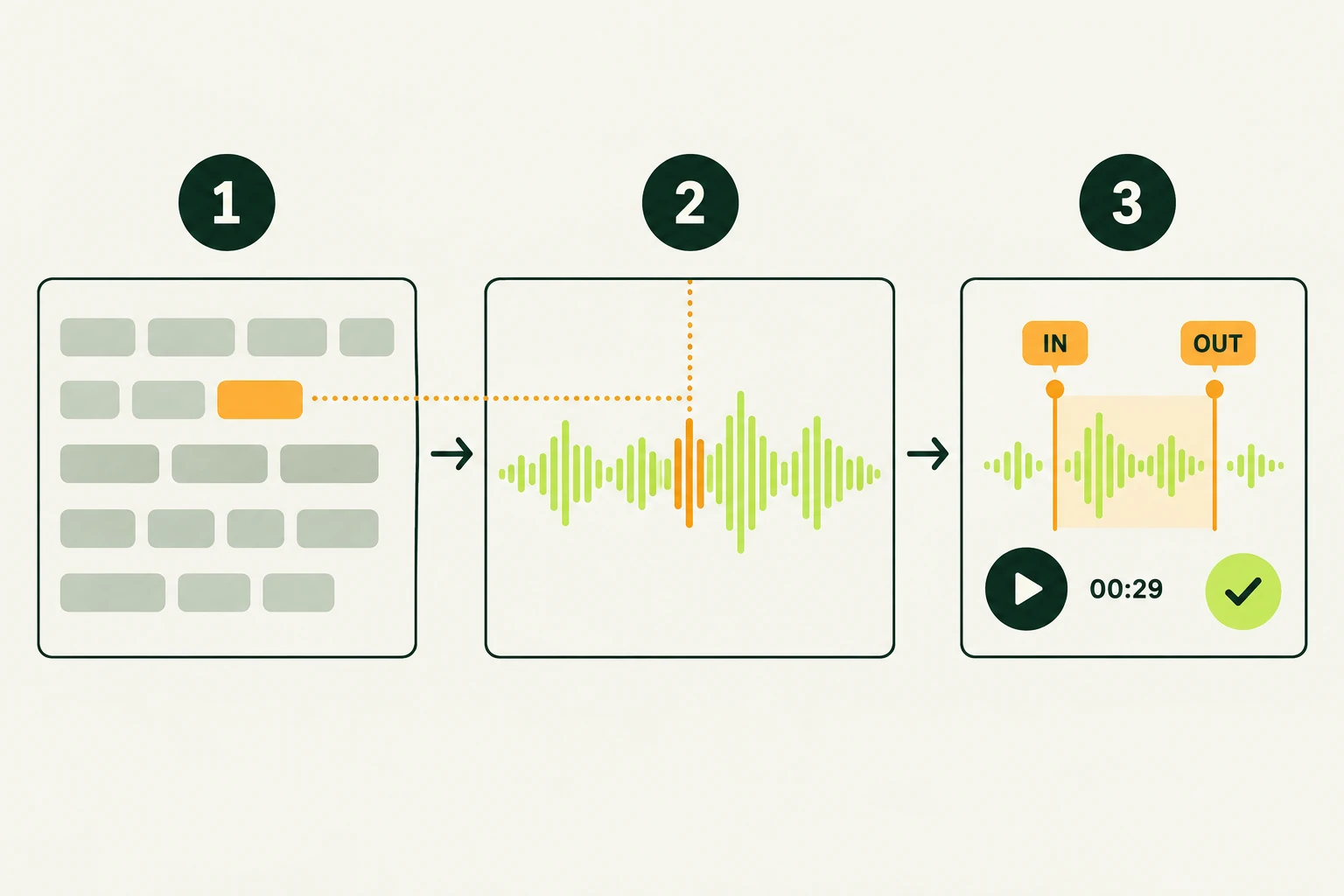
Text, sound and metadata on one timeline. Select a statement, set IN/OUT, add a piece of the next hour. Save your edit.
DEMONSTRATION MATERIAL10:59:08 → 11:00:213 VOICES · 2 MUSIC SEGMENTS
SZPIEG+RADIO WNET / L00P.AI
HOUR1011
LOCAL DEMO
WORD ⇄ TIME ⇄ RECORDINGClick a word · Shift + click sets OUT
JJessica00:04.0
CChris00:10.9
GGeorge00:16.5
JJessica00:22.0
CChris00:24.9
JJessica00:26.5
GGeorge00:29.9
CChris00:37.8
JJessica00:48.7
GGeorge00:53.2
CChris00:55.1
JJessica01:02.3
GGeorge01:07.4
CChris01:09.4
WAVEFORM / SPEECH / MUSIC / SPEAKERS
● Jessica● Chris● George♫ music┊ hour boundary
+ The next hour
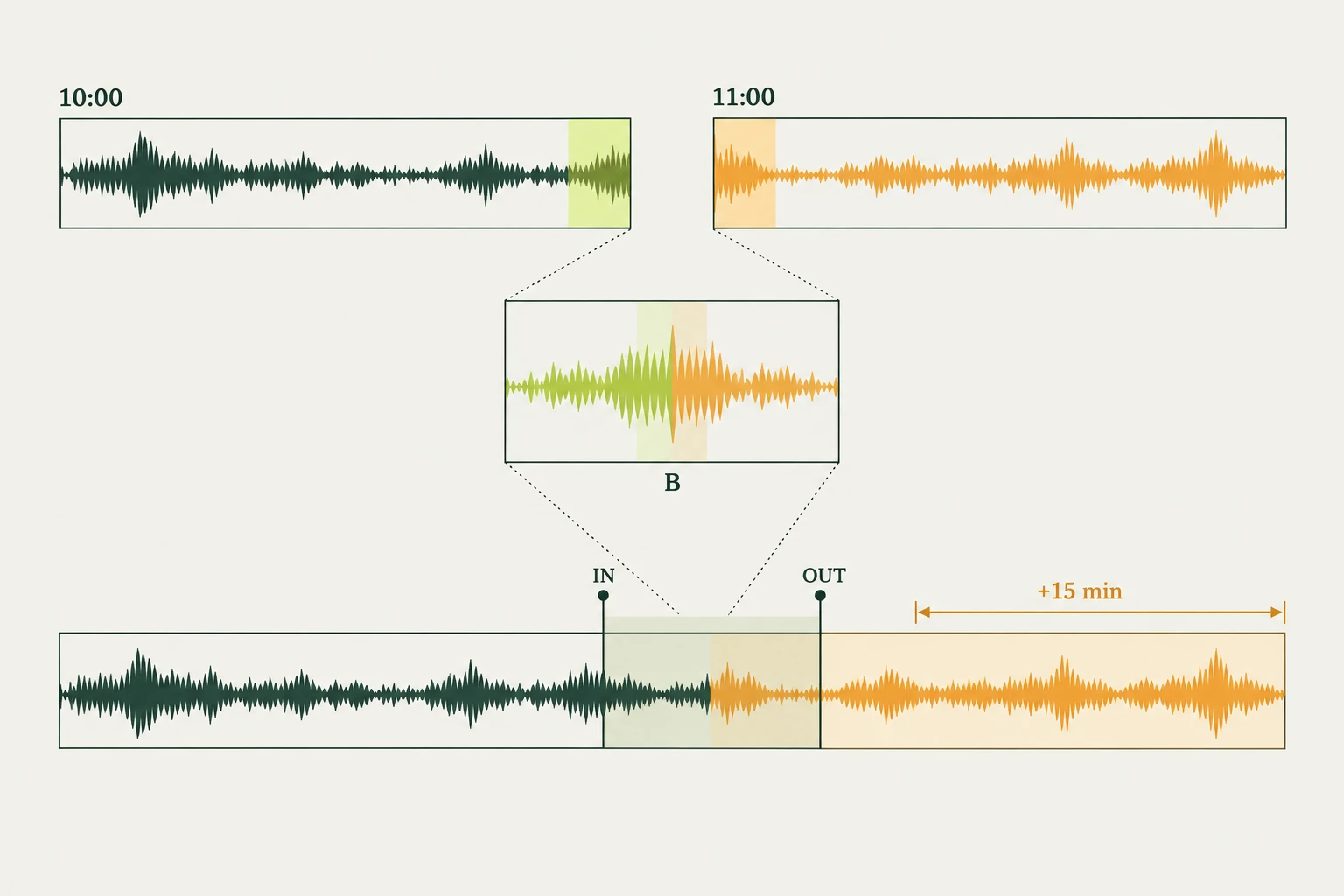
The next file starts with a 2.400 s overlap. It is omitted when joining.
Loaded: the end of hour 10. The next hour is available.
/ 00:52
Selection: 4,760 sWAV PCM · sample copy, no rendering
Loading controls…
Interactive replica based on Szpieg+ on ZBook. Synthetic Polish voices, music and demonstration markers. Runs independently in your browser.
Download a real WAV, transcript and references to the source files. This demo uses PCM; compressed MP3 cuts are constrained by frame boundaries.
SZPIEG+ / WORKING FEATURES FOR DEPLOYMENT
Two ways into the same recording.
The text stays connected to sound. Word-level synchronisation lets you verify transcription and select material precisely. The waveform editor complements this workflow when sound matters or a conversation continues into another file.
A
Karaoke transcript
Start with the meaning of the words.
Click a word to return to its moment in the recording.
Follow the words during playback. Check the transcription, speaker and meaning: human-in-the-loop review.
Set IN/OUT in the text. The selection stays linked to the audio and its source material.
B
Waveform + the next hour
Start with sound and continuity.
Navigate the waveform, listen and mark the clip boundaries.
Does the conversation continue? Add 15, 30, 45 or 60 minutes from the next file. A detected overlap is not played twice.
The added transcript helps locate speech. A selection across the join refers to timestamps in both source files.
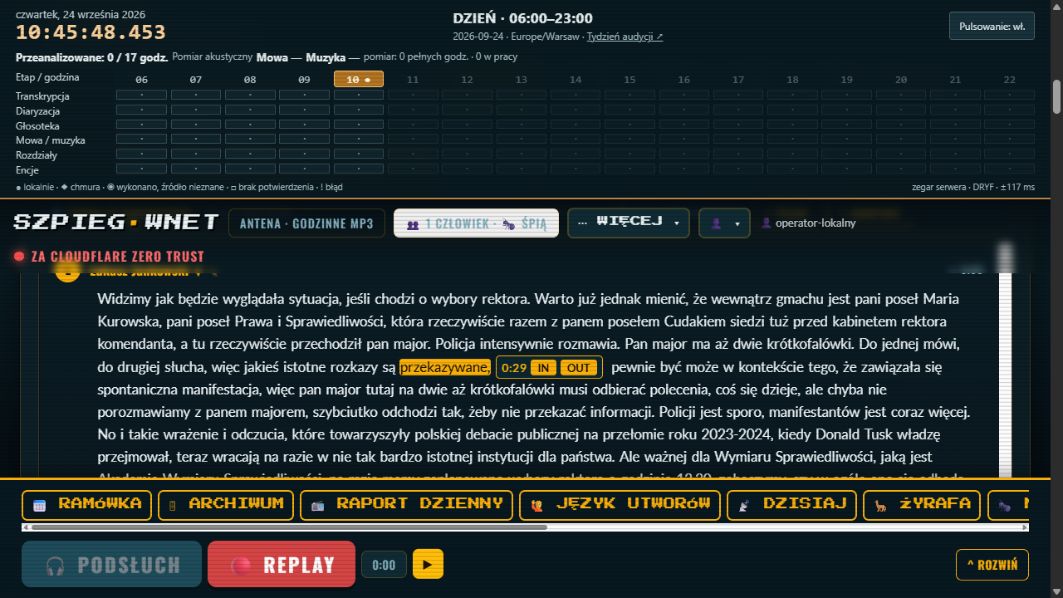
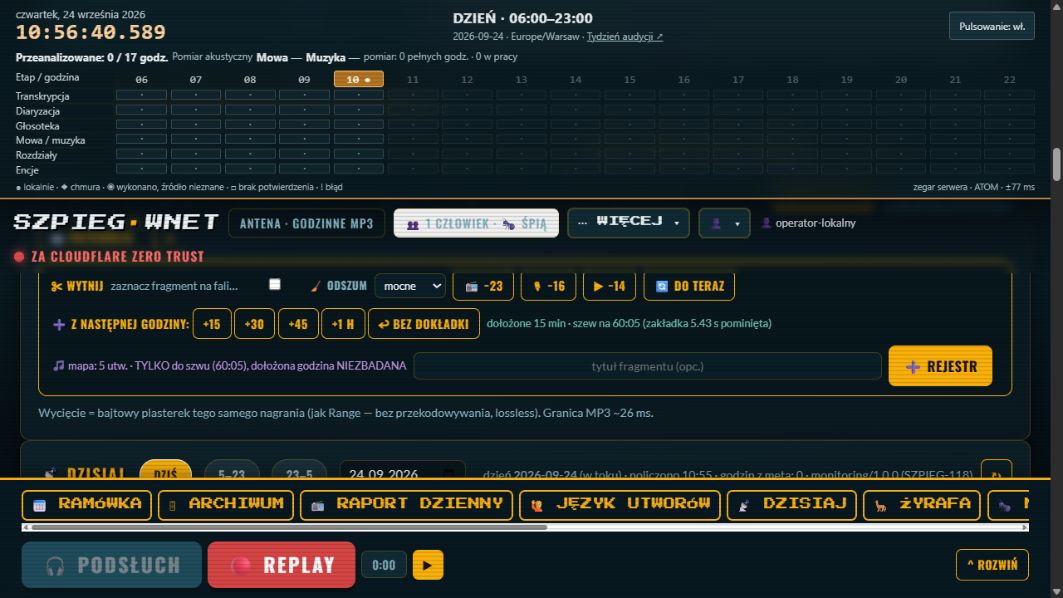
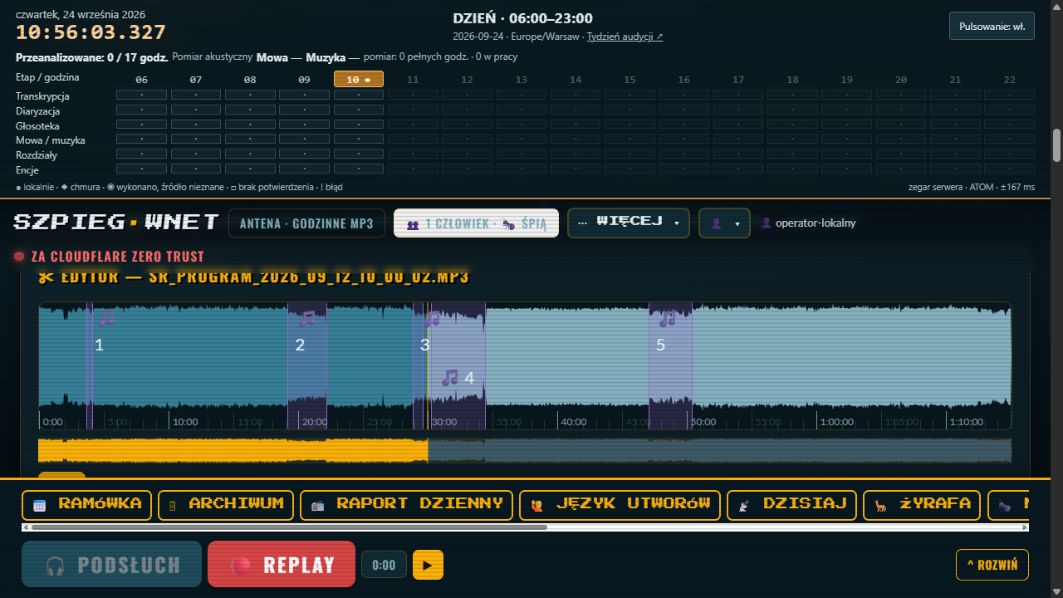
The infographics explain the workflows. Below: authentic application screenshots, without AI redrawing the interface.
From Szpieg+ running on ZBook
24.09.2026 · Radio Wnet
A · Word → time → playback
Recording from 11 September 2026, 10:00. ASR text, a highlighted word and cut controls. Transcript content and speaker labels require editorial review.
Listen and assess the waveform cut, including across a join.
Transcription
Current-word highlighting, speakers and timestamps.
Added-hour text with timestamp navigation and IN/OUT; no continuous word highlighting in the added text.
Source material
Each word remains attached to a location in the recording.
A clip crossing the boundary retains references to both files.
Running at Radio Wnet. Preparing customer deployments.
We select the scope, integrations and environment, then agree acceptance checks using customer material. Screenshots document specific features, not a complete product test. The extension workflow flags gaps and uncertain joins; some subsequent operations require a separate editing stage.
OUR ADVANTAGE / FROM LAB TO REAL WORK
Tested in our workspace. Deployed in yours.
Radio Wnet and Czarne Niebo are both our laboratory and our daily workspace. Working with public data in real time and in the archive lets us move quickly from new technology to a tested use case. Initial trials use our own test material, so you do not need to share your organisation’s confidential data with us.
01
Our material
Large collections of public, already published recordings. Live broadcasting, video and archives give us real tasks on which to design and test solutions.
02
Tested in real work
We try new models and tools in the lab and our daily workspace. We measure quality, time, cost and hardware requirements. A solution is tested on our material before it touches yours.
03
Faster into your organisation
We bring the tested approach, configure the environment and adapt the application to your workflows. Your encrypted data remains under your control; we agree the scope and acceptance checks with you.
DEPLOYMENT OPTION
100% local. Offline too.
When you need it, we select models and tools that run without Internet access after installation. Recordings, documents, transcripts and RAG indexes are processed on your infrastructure.
We design encryption for stored data and data in transit, with access for authorised people. We verify the complete offline configuration with the Internet disconnected.
Choose an area and see what runs, what is being deployed and what remains a direction for development. Each solution leads to an article showing our method and its limits.
SOLUTION AREA
The recording remains the source
From broadcast to verifiable words, speakers and audio excerpts.
The voice bank suggests speaker matches. Głosobranie adds a game and review panel so people can organise samples and confirm labels.
What works and what is evolving
The voice bank is part of the system. Głosobranie is deployed locally; participant review and quality validation remain pilot stages. Recognition does not grant permission to clone a voice.
Live captions enriched with metadata, multitrack recording, studio controls, 3D environments and “Shadows” — personal tools supporting creators.
What works and what is evolving
These are at different research and prototype stages. Avatars, personal voices and telepresence are development directions, not claims of completed deployment.
A substantial project starts with someone who knows their organisation.
I work with owners and leaders who run their organisations every day and want to initiate change themselves. You bring knowledge of your people, processes and goals. I help turn it into working AI tools.
Lech R. Rustecki · L00P.AI
01
The leader’s workspace
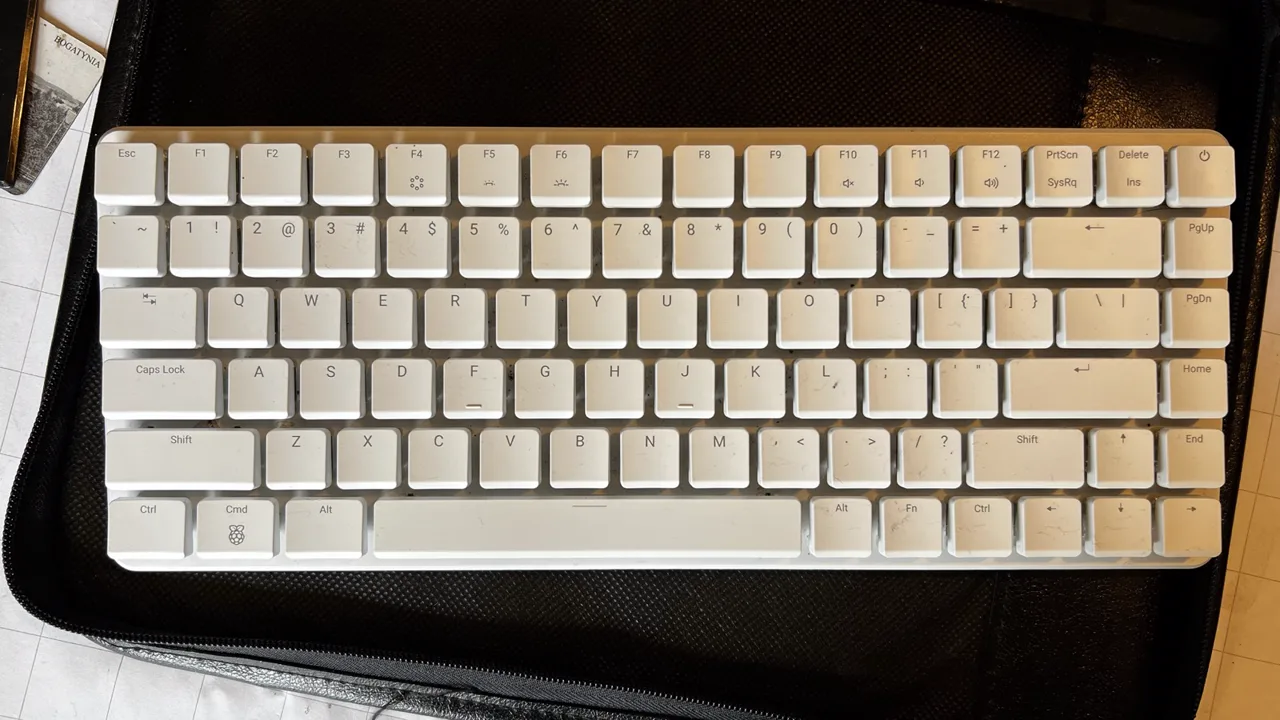
A Raspberry Pi 500+ for learning by doing, with a beginner’s curiosity. We choose the appropriate US/EU keyboard and power setup. Alongside it: a clean laptop with 128 or 256 GB RAM for models and your own data.
02
Your vision, a shared direction
We begin with your perspective and your organisation’s ambitions. We connect them with the latest models and environments in which agents plan, use memory and tools, carry out tasks and work with people. We agree the scope and how to assess the results together.
03
Custom applications and growth
Proven procedures become agent tools and application code. We develop integrations, permissions, human review and documentation. Your team learns how to keep developing this workspace.
PROJECT SCALE
Hardware is chosen for the work it needs to do.
I help plan infrastructure and hardware budgets that may reach PLN 100,000–200,000. Model installation, configuration, RAG and application development require a separate services budget of tens of thousands of PLN. Scope and budget follow an assessment of your needs.
We are preparing a curated integration for US and European-keyboard Raspberry Pi 500+ variants: AI agents, Szpieg+ and tools for working with recordings. The starting point will be a folder containing your audio archive. Your knowledge of your organisation meets our radio production experience on your own computer.
We are building from scratch on our US-keyboard Pi 500+. The release will also be checked for European keyboard layouts. After testing: a free image via torrent.
01
Start your workspace
Planned image: 64-bit Raspberry Pi OS, local tools and a first-run guide.
02
Choose your recordings
Szpieg+: recordings, words and metadata linked on a timeline. The Pi adaptation still needs acceptance testing.
03
Develop it your way
From a personal workspace to a project for your organisation, with us or independently.
Free image. Hardware, service accounts and deployment support are separate.
VISUAL EXPERIMENT / 26 SEPTEMBER 2026
What are we really comparing?
Both models received the same prompt for Polish image text and the same 1600 × 900 px photograph of our US-layout Pi 500+. This is one result per model. We did not control a shared random seed or repeat the trial, so it is not a model-quality ranking. The files are shown in the same 3:2 frame; the originals had different resolutions.
gpt-image-2
It made an orderly workshop poster. Both slogans are legible, and the green sticker with yellow zeros sits on the space bar. The historic computers in the background are interpretations, not hardware documentation.
Gemini 3.1 Flash Image
It kept the keyboard look and both slogans, but placed the sticker partly below the space bar. It added distorted labels to the retro-computer drawings; those should not be read as model names.
In the opening graphic, the sticker lettering is a separately positioned vector layer based on the canonical L00P.AI mark. Below, both model outputs appear side by side without this correction, so their own errors remain visible.
These are observations about two images, not evidence that one model is inherently better at typography or hardware. Research on text-to-image composition documents errors in attribute binding and spatial relations. The misplaced sticker fits that failure category, but the research did not test these model versions or photo-conditioned edits. Vendor documentation confirms image editing and text rendering, but does not reveal the cause of this particular result.
EU refers to specific keyboard layouts, including DE, ES, FR, IT and PT, not one universal layout. For now we are building on our own US unit; European-layout tests remain planned.
Our own unit, photographed as the input to both models. Photograph: Lech R. Rustecki. The images above were generated by AI.
Raspberry Pi is a trademark of Raspberry Pi Ltd. L00P.AI is an independent project and does not claim endorsement by the manufacturer.
02 / METHOD
From an agent’s skill to an application.
First, we give agents context, procedures and tools. Proven sequences become code in Szpieg+ and its related modules.
01
Experience
Interviewing, research, production and editing methods become explicit instructions.
02
Experiment
An agent uses tools on real material. We review the output and improve the procedure.
03
Application
Code selects input, transcription, prompt version and model. It checks responses, records results and enforces approvals.
The application workflow is deterministic: stage order, rules, versions and transition conditions. LLM output remains probabilistic. Sources, fidelity checks and human decisions are therefore part of the system.
DEVELOPMENT DIRECTION / VIDEO EDITING WITH AGENTS
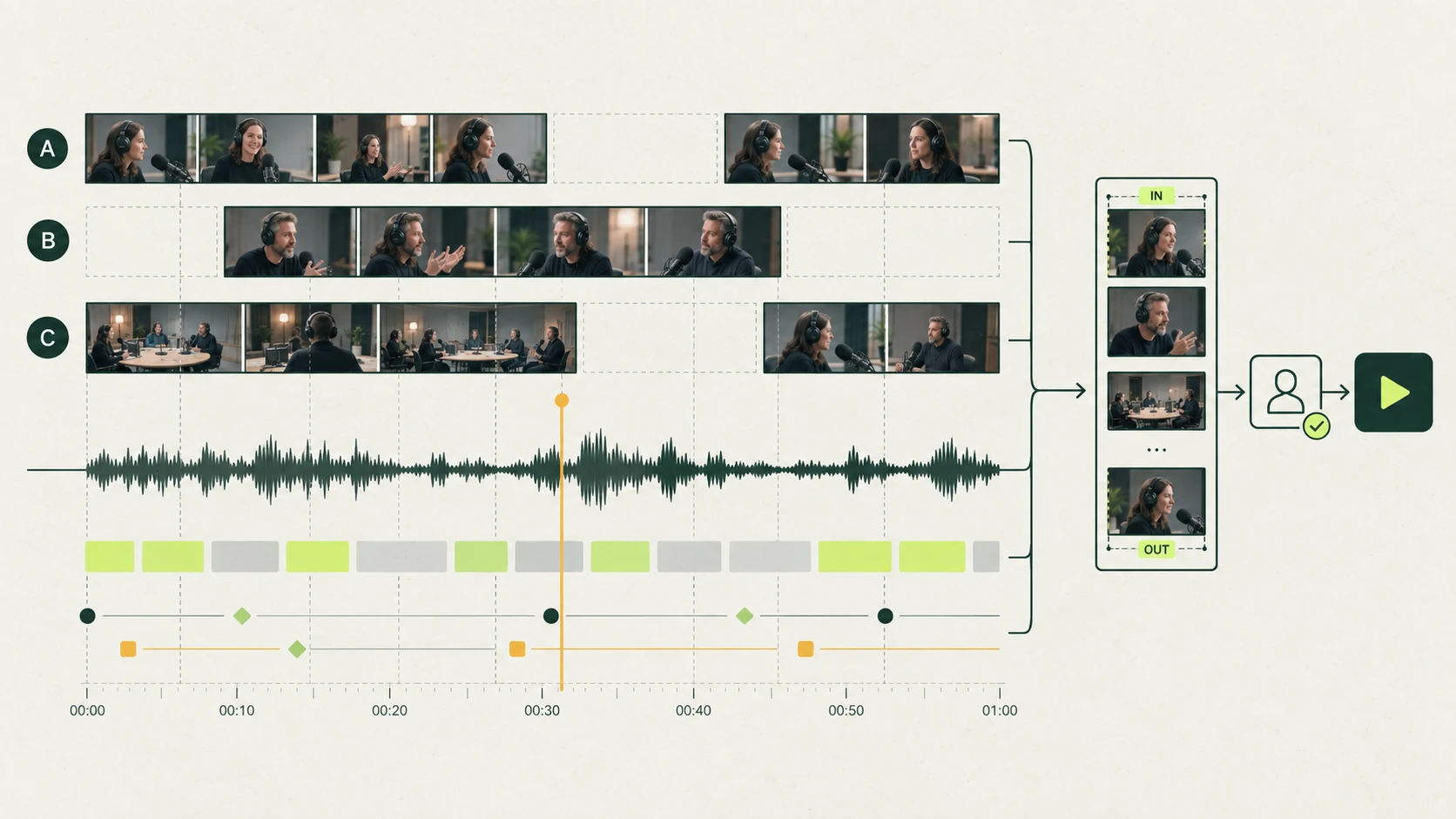
Multiple cameras. The same event.
We are developing a workspace where a transcript attached to audio also guides video editing. Material from different cameras and files meets on a shared timeline.
AI-generated concept illustration. Multi-camera synchronisation and agent editing are development directions, not a demonstration of a completed module.
01
One reference timeline
Audio, words, speakers, chapters and entities stay linked. Video from cameras and files covering the same period is added, accounting for offsets, gaps and clock drift.
02
The agent learns to edit
We develop skills for proposing shots, cuts, captions, chapters and output versions. Every decision should lead back to its source and remain editable.
03
A workspace for YouTube channels
The goal is a Szpieg+-scale system for regular channel production, building on Radio Wnet and Czarne Niebo experience. A person remains responsible for the final edit and publication.
Interface vision: Canva-like freedom to compose, ChatGPT-like conversation about the task and NotebookLM-like work with sources. Centred on your own material, its timeline and human decisions.
L00P.AI / WHO LEADS
HUMAN
Lech R. Rustecki
Founder and head of L00P.AI. Editor-in-Chief of Radio L00P.AI.
Lech R. Rustecki — founder and head of L00P.AI. A trainer, executive coach (AoEC) and mentor since the late 1990s, he led development programmes at Marshall Goldsmith Partners CEE and at Mind Partners, which he co-founded. A co-founder of the Wnet media cooperative and, since 2022, a board member of Radio Wnet, where he is responsible for streaming and AI deployment.
He studied intercultural psychology (SWPS University) and economics (University of Warsaw). He wrote about large language models in Kurier WNET on 13 November 2022, seventeen days before ChatGPT was released, and in March 2023 conducted Radio Wnet's first-ever interview with an AI. Not a psychologist, economist or programmer, but someone who brings people, media and AI agents together into one team.
1human — direction and responsibility
21synthetic personas of Radio L00P.AI
RADIO L00P.AI / AI PERSONAS
Synthetic team
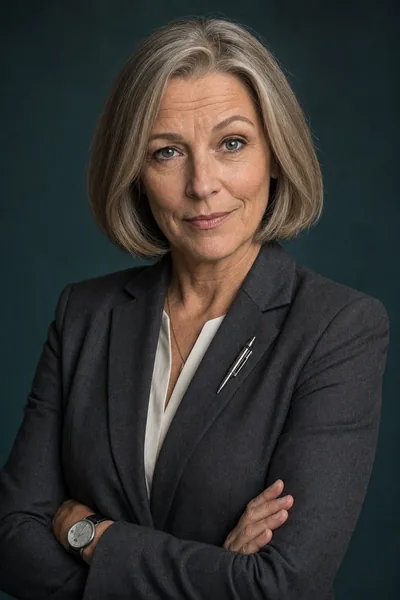
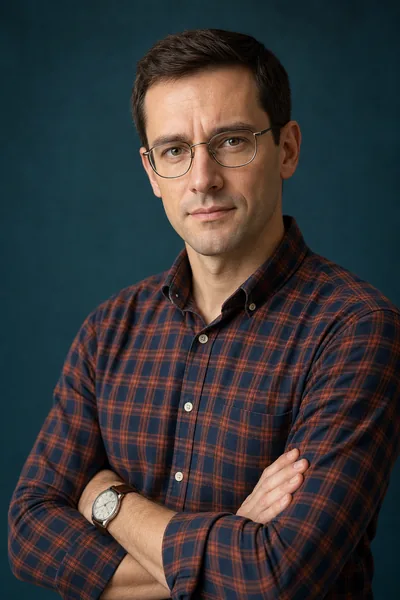
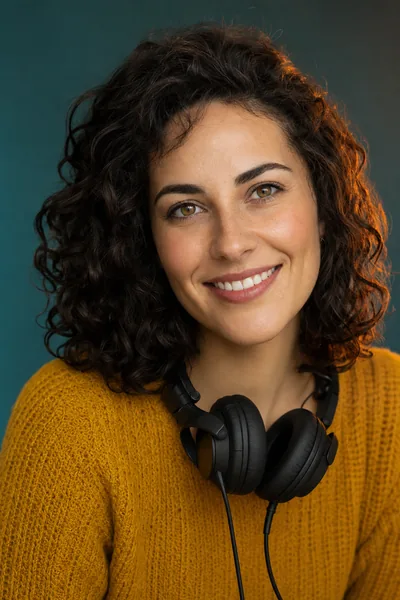
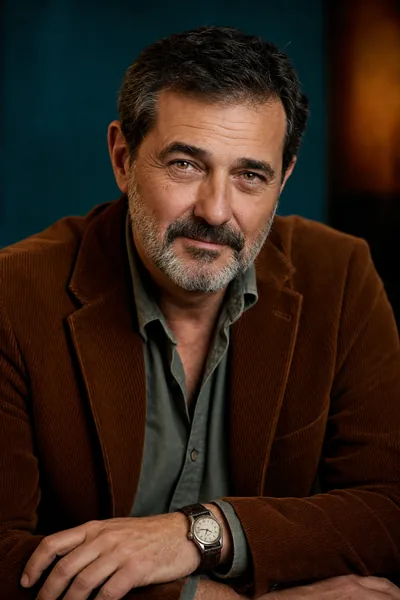
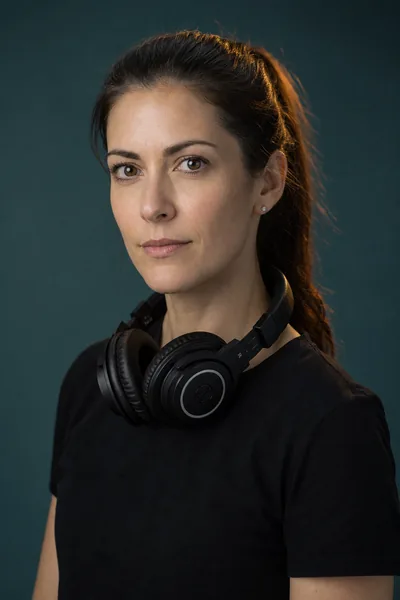
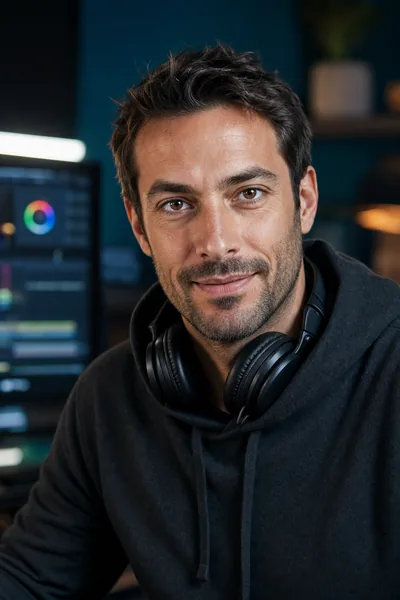
21 fictional personas form the cast of Radio L00P.AI. Their names, roles and portraits are elements of an AI project, not employees or biographies of real people. Lech is the human who leads this team.
SI
Renata Gawlik
Editor-in-Chief — deputy agent
Helmswoman in a storm
“The broadcast waits for no one.”
Works with Lech R. Rustecki, Editor-in-Chief of Radio L00P.AI.
Fictional AI persona
SI
Bartosz Lemański
Broadcast Secretary
Schedule clockmaker
“A second on air is an eternity.”
Fictional AI persona
SI
Jaśmina Rogala
Presenter / Host
Morning spark
“I ask because I really want to know.”
Fictional AI persona
SI
Krzysztof Cieślar
Presenter / Host
Storyteller with an anchor
“History likes to be listened to.”
Fictional AI persona
SI
Klaudia Pietrzyk
Radio Production
Quiet console
“A good sound engineer goes unheard.”
Fictional AI persona
SI
Michał Sarnowski
Editors / Audiovisual Producers
Adrenaline editor
“One frame too long is one frame too many.”
Fictional AI persona
SI
Iwona Szarek
Deputy Music Director — agent
An ear for the era
“A playlist should tell a story, not just play.”
Works with Music Director Tomasz Wybranowski.
Fictional AI persona
SI
Ryszard Filipczak
Music Library / Librarian
Keeper of the groove
“Tape remembers more than people do.”
Fictional AI persona
SI
Mateusz Hajduk
Newsroom / News and Fact-checking
Source hound
“Another source, or it goes in the bin.”
Fictional AI persona
SI
Natalia Suchecka
SZPIEG / Monitoring and Ingest
The listener
“What went on air can be found again.”
Fictional AI persona
SI
Oliwia Marczewska
Online Editors
From broadcast to browser
“A headline should invite, not deceive.”
Fictional AI persona
SI
Agata Sobczuk
Audience Analytics
Mapper of audience bubbles
“A chart without context is a pretty liar.”
Fictional AI persona
SI
Marta Kudela
Sales Agency
Trust trader
“I sell reach, not the soul of the station.”
Fictional AI persona
SI
Dawid Motyka
Accounting / AI Economics
Token counter
“Every penny has its own row in the spreadsheet.”
Fictional AI persona
SI
Julia Krzemień
Marketing / Promotion / Growth
Signal flare
“We do not shout. We shine.”
Fictional AI persona
SI
Igor Bartnik
Listener Relations / Community
Neighbourhood host
“A listener writes — a listener exists.”
Fictional AI persona
SI
Zuzanna Kędzior
Development / Content Factory
Prototype workshop
“Build version zero before calling a meeting.”
Fictional AI persona
SI
Weronika Firlej
IT / Infrastructure / Security
Keeper of the keys
“Paranoia is the contingency plan you already have.”
Fictional AI persona
SI
Paweł Cichoń
Compliance / Legal
Brakes with a heart
“Better to cut a sentence than lose a broadcasting licence.”
Fictional AI persona
SI
Aleksandra Wierzba
Compliance and Legal / Legal Counsel
Guardian
“Freedom needs order. Order needs understanding.”
Fictional AI persona
SI
Kacper Zielonka
Administration / Office
Editorial glue
“There are no small matters, only neglected ones.”
Fictional AI persona
03 / DEVELOPMENT
Development measured through work.
Direction and leadership: Lech R. Rustecki. Development: the L00P.AI workspace with AI agents and Radio L00P.AI’s synthetic team.
Before 2026
Nearly two decades of radio craft, production tools and team experience.
Early 2026
Systematic transfer of procedures and tools to agents. Development of a knowledge base, skills and initial pipelines.
June–September 2026
Documented releases of Szpieg+, the voice bank and wideocast. Production adapted to native Windows on ZBook, with further editorial deployments.
Next
Audio linked to transcripts and metadata as a reference for multiple cameras. Agent video editing and a workspace for regular YouTube channel production.
04 / RESOURCES
Read how we reach a result.
Resources connect articles, sources, methods and documented limits. Choose a subject relevant to your organisation, then return to a conversation about what to build.
You know your organisation. We build environments where AI agents work with models, memory, skills and tools under human supervision. Let’s bring those two perspectives together.
I also welcome conversations about funding L00P.AI and the development of Szpieg+, including angel investment.