
A manual that invites you to try
ZX Spectrum, Commodore 64 and our February 2026 OpenClaw handbook. Original diagrams, quoted editorial instructions and a path from a first experiment to a creator’s autonomy.
2026-09-25 · 1.0 · PL / EN
See the whole workspace first
A good manual helps you begin. It shows the parts, gives you a first task and helps you recognise success. In February 2026, we drew on that approach while writing one of our early handbooks for working with autonomous agents: OpenClaw, for people creating text, sound and their own processes.
The editorial guide preserved from 5 February says, in translation: “Address the reader directly — ‘you’, not ‘the user’.” Another instruction reads: “Analogies with the 8-bit era — Commodore 64 and ZX Spectrum manuals, PC pioneers.” These instructions were written during the handbook’s development; they are not a brand story added months later.
The confirmed references were ZX Spectrum and Commodore 64. The research note identifies titles and archives, but does not document downloading a particular ZX Spectrum file. We selected the excerpts below from available editions for this article. They illustrate the approach; they do not establish that these exact scans were used in February.
ZX Spectrum: start with the connections
The diagram in the short ZX Spectrum introduction presents the computer, television and power supply together. Readers can compare it with their own desk. This opening makes the machine approachable: the manual guides a first action before requiring an understanding of the entire system.
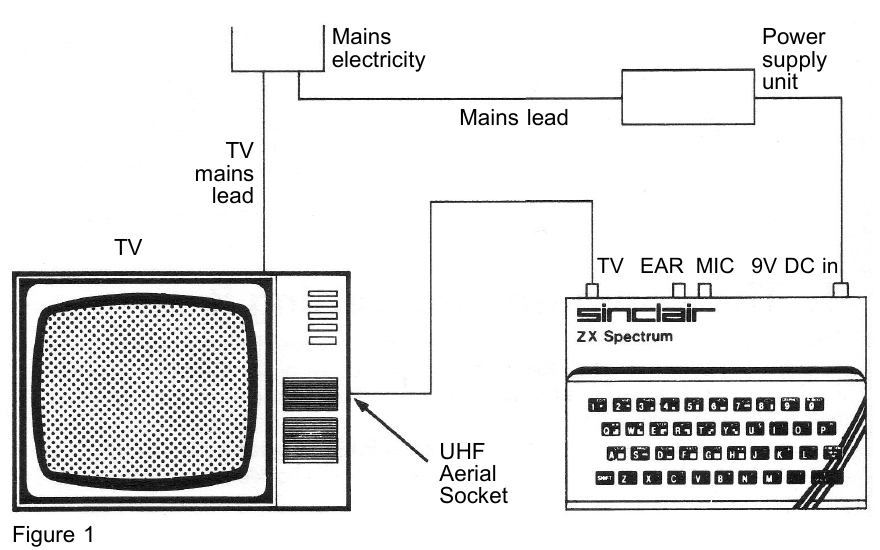
In an agent workspace, the equivalent is a map of the materials, available tools and destination of the result. A creator should be able to understand it without knowing the implementation. Technical detail remains available when it helps solve the problem.
Commodore 64: an example leads further
The C64 guide also begins by assembling a working setup. Its chapters progress from getting started through programming to graphics and sound. We read that as an invitation to take control of the tool gradually. There is a visible path from the first result to a project of your own.
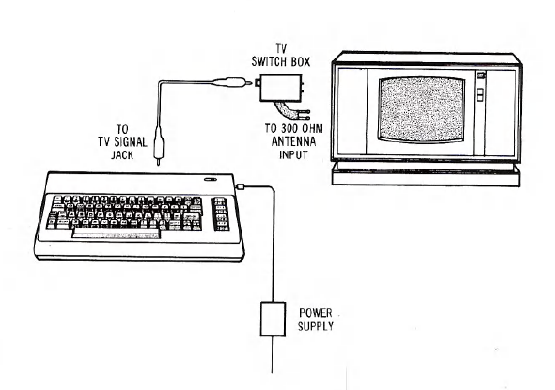
The February OpenClaw guide translated this into a chapter structure: concrete context, an example, an exercise and the lessons learned. It also included the rule, translated here: “Every example should be real.” Our current editorial practice treats this as a requirement to state where an example comes from. If it is invented for teaching, we identify it as such.
What carries into agent work
The first result should belong to the reader. Instead of mastering an encyclopaedia of commands, choose something you understand from your own practice and use it to judge the tool. A conversation with an agent can address the goal, constraints and criteria for success; code becomes one means of achieving them.
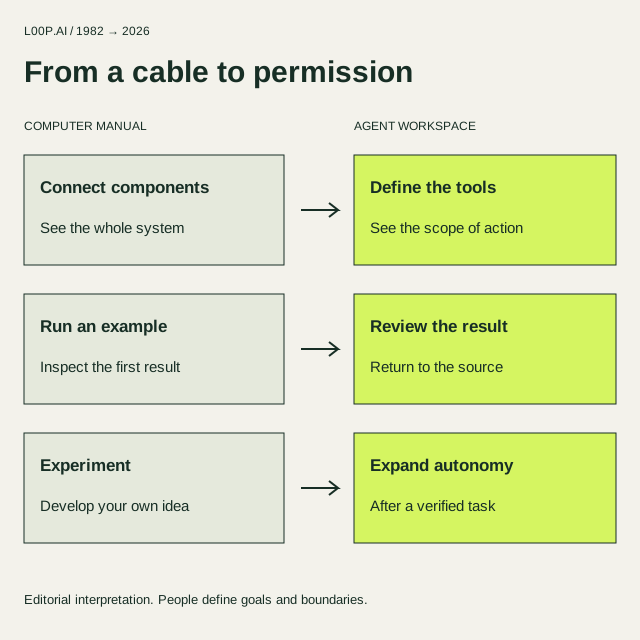
Experimenting with a home computer and operating an agent have different consequences. An agent equipped with tools can write files, publish and communicate with other services. Start a first trial on a copy, with an explicit scope of action and a way to review the outcome. Greater autonomy should follow from that trial’s result.
The archived OpenClaw manuscript states this directly, in translation: “Trust in an AI agent should grow in the same way — gradually.” Today we connect the reader’s sense of agency with recorded sources, tool controls and the ability to stop a process. How we define an agent’s authority.
Your first exercise
Choose a small piece of your own material and a change whose value you can judge. It might be a script excerpt, an arrangement of information or a stage in a process you have known for years. You define the task. The box below is a contemporary L00P.AI editorial exercise; it is not taken from a 1982 manual.
We are working on a copy of this material.
My intended goal: [your goal].
A good result will meet this criterion: [your criterion].

First explain how you understand the task and what you need to check.
Carry out the agreed trial. Show the result, sources and changes.
If something cannot be established, preserve that information.
Do not expand the tool scope beyond the agreed trial.
After the trial, return to your criterion. Does the result solve the problem? Can you see where it came from? Use that evidence to choose the next step. We expect the same from a manual: it should enable informed action, rather than dependence on further prompts.
Where does the Amiga fit?
A different, later document — the Szpieg+ manual — contains a separate reference to “booklets from boxed adventure games for the Commodore Amiga”, with a “console map” and a “step-by-step mission”. These phrases are translated from Polish. The preserved description names no particular game. We therefore do not attribute the February OpenClaw guide to an unidentified Amiga manual.
The Amiga and Atari ST also belong in our audio workspace. The Retroaudio module in Resources keeps current listings separate from this history. It explains MIDI, sampling interfaces and the distinction between Chip RAM and Fast RAM. Used equipment prices change quickly; that does not require rewriting the history of our teaching approach.
Sources and limits
- OpenClaw Handbook — Style Guide, instructions and feedback dated 5 February 2026: the source of the quoted editorial instructions. English quotations above are translations.
- Inspirations: 8-bit manuals, research note dated 5 February 2026, and the archived OpenClaw DRAFT v0.9.1 manuscript, February 2026: evidence of the work’s direction. We are not publishing them here as current product documentation.
- ZX Spectrum Introduction — World of Spectrum Classic: author credits and access to the PDF edition; figure 1 on p. 6 and the edition’s rights notice were inspected.
- Commodore 64 User’s Guide — Zimmers: the copyright page, contents and “Setup” excerpt on p. 4 were inspected. The Commodore.ca address recorded in February refused access during this review; an available edition from another archive is shown.
- Szpieg+ manual, preserved workshop version: the source of the Amiga booklet reference. Our current Szpieg+ guide.
The captures are limited visual quotations used to compare teaching approaches. Cropping removes adjacent text without changing the diagrams. Rights and authorship remain with their owners; we grant no licence to the full manuals. The colour diagram is a contemporary L00P.AI interpretation, not a scan or an image-model generation.
Lech R. Rustecki proposed selecting and publishing this story. Codex located the documents, compared sources and prepared the Polish and English versions. No independent second-model review was performed. These documents do not establish priority over the wider market; this is an account of our own workshop.